
Powering Classrooms in Zanzibar: How Government Schools Are Going Digital with Microsoft 365
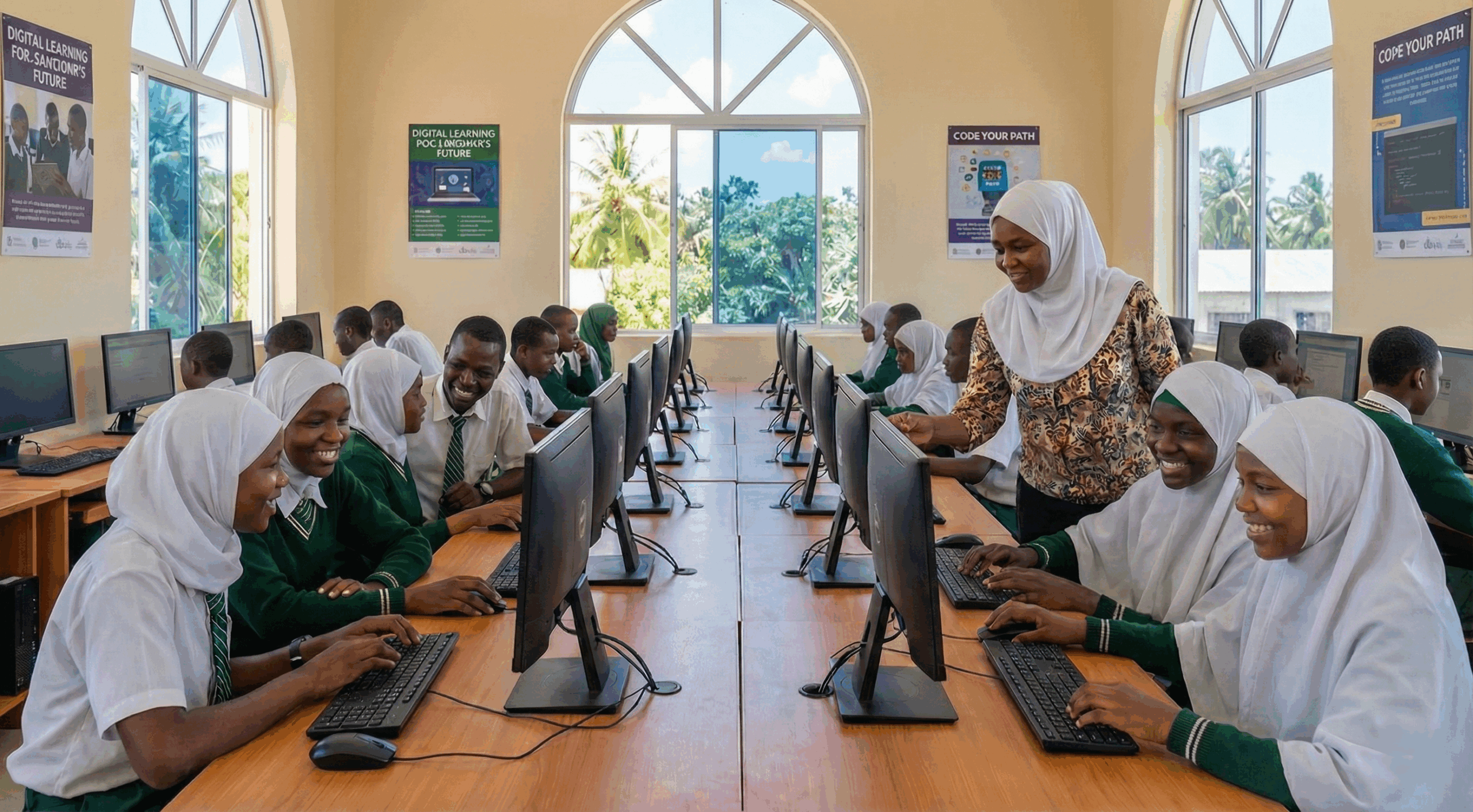
Inside the computer lab at Bwefum Secondary School in Fumba, Zanzibar, the air buzzes with the quiet sounds of active learning.
The rhythmic clicking of keyboards mixes with the collaborative whispers of students working together on a project. A teacher moves between desks, leaning in to help a learner adjust a slide in a PowerPoint presentation. Sunlight streams through the windows, reflecting off the monitors and illuminating a classroom vibrant with potential. For many of these learners, this is their first experience of a modern digital classroom. Just a few years ago, the situation was very different.
From Typing Practice to True Digital Learning
While Zanzibar’s government schools have long recognized the importance of ICT, their computer labs faced significant challenges that hindered true digital integration. The reality for
Past challenges included:
• Old or mismatched machines
• Standalone Office copies that were difficult to maintain
• Little or no cloud storage
• Shared logins, USB sticks and lost files
These issues created a high-risk environment for educators. Teachers were often hesitant to build lessons around technology that could fail at any moment, turning what should have been an engaging class into a frustrating technical support session. As one teacher noted:
The Vision: A Standardized and Practical Solution
The Ministry of Education and Vocational Training needed a more practical approach to digital transformation. Their goal was clear: to standardize digital learning tools and resources across all government schools in a way that empowered teachers and students without depending on a perfect internet connection in every classroom. The solution had to be robust, manageable, and tailored to the on-the-ground realities of the schools it was meant to serve.